
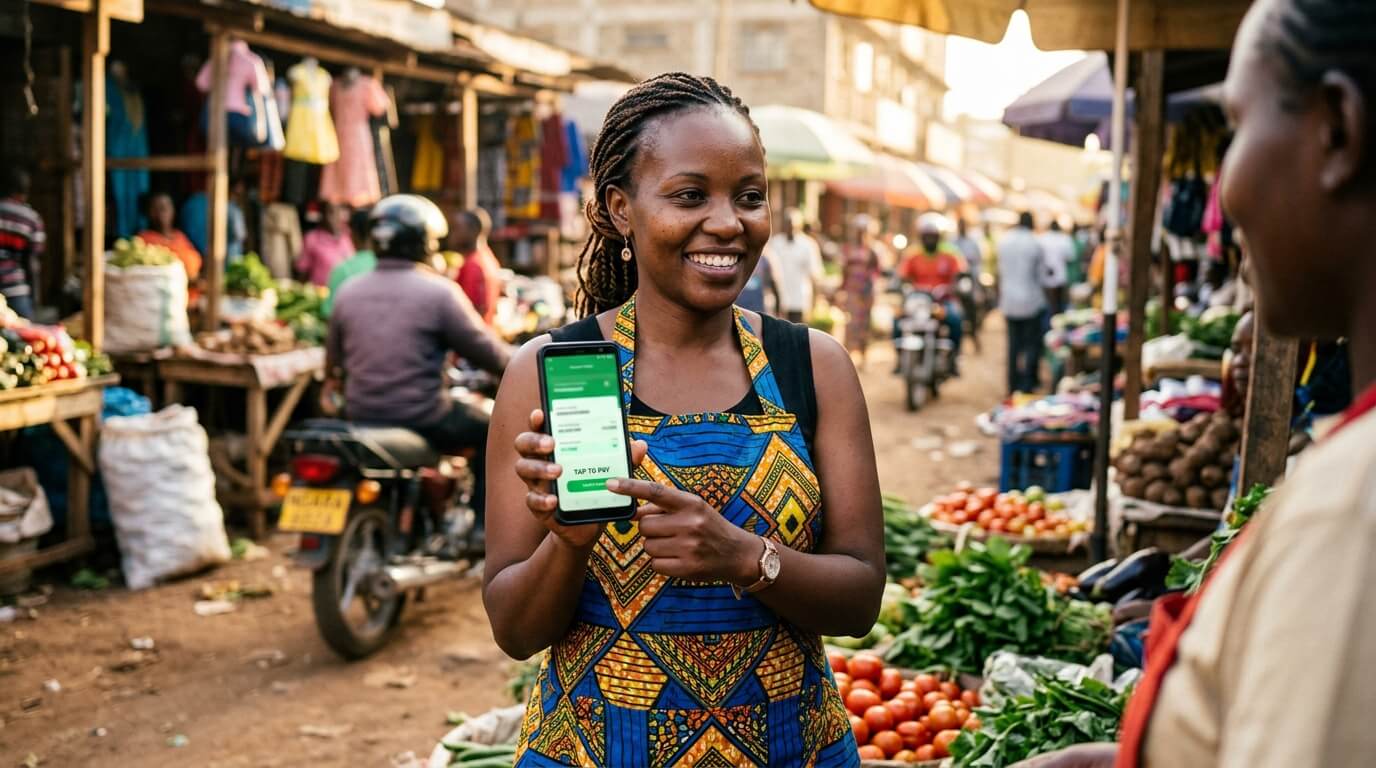
Every shilling that leaves your M-Pesa, Airtel Money or T-Kash wallet takes a jab from KRA before it lands anywhere — but not on the chin most Kenyans are guarding. A rumour that refuses to die — the kind of forward-it-now-fact-check-later message that outruns every correction — keeps insisting the taxman has started clawing at the money itself: the principal, the actual shillings you are sending your mother in Kakamega. The version going round reads, roughly: "KRA WAMEWEKA TAX MPYA KWA M-PESA!! Kila pesa utakayotuma watakata mpaka 20%!" It is wrong on the target and wrong on the number. KRA has never taxed the principal. Not once. What gets hit, every single time, is the fee.
Excise duty is a consumption tax that the Kenya Revenue Authority (KRA) charges not on the money sitting in your wallet, but on the fee the provider charges you for moving it. Not the principal. The fee.
Section 5, read together with Part II of the First Schedule to the Excise Duty Act, 2015 (Cap. 472), lists money transfer services offered by banks, money transfer agencies and other financial service providers as an excisable service. The tax base is the "excisable value" — statute-speak for the transaction charge, and nothing else. The First Schedule does not split hairs: it taxes what the network earns off you, not what you are sending to settle your brother's school fees.
That rate has climbed. Excise duty on money transfer fees was introduced by the Finance Act, 2012 at 10 per cent, crept upward over the following decade, and was pushed to its current 15 per cent by the Finance Act, 2023, effective 29th July 2023. Safaricom, Airtel and Telkom all revised their tariffs that same week to absorb it, which is why send-money charges have edged up since 2023 even though the underlying service never changed. Airtel Money and T-Kash carry the identical 15 per cent, because the statute taxes the service, not the SIM card.
Deposit cash into your wallet and Safaricom charges you nothing. No fee, no excisable value, nothing for KRA to touch. That is also why receiving money from a friend costs you nothing directly — the excise duty was already paid, and paid by the sender, baked into the fee charged on the way out.
I am hazarding a guess that whoever wrote that forward has never opened the Excise Duty Act in their life, so let me translate the fear behind it. The assumption is that KRA is treating every transfer as income. It is not. The Treasury has said so plainly: mobile money transfers are not treated as income, and KRA is not chasing individuals for sending or receiving money on their phones. What KRA does watch, through the KRA PIN linked to every Till Number and Paybill shortcode, is business turnover moving through merchant accounts — a trader collecting between Kshs 1 million and Kshs 25 million a year through a Till is liable for Turnover Tax at 1.5 per cent of gross sales, and must issue an eTIMS invoice for it, quite separate from the excise duty on the transaction fee itself. A Pochi La Biashara account receiving lunch money from a friend is not the same animal as a shop till ringing up daily sales, even if both run on the same green app.
Now the numbers, because a column without shillings is just an opinion.
Take Moraa, a mitumba trader in Gikomba who sends Kshs 1,000 to her supplier most market days. M-Pesa charges her Kshs 13 for that transfer. Strip out the 15 per cent excise duty riding inside that fee and Safaricom's own charge is Kshs 11.30, with KRA quietly pocketing the remaining Kshs 1.70. Six market days a week, that is Kshs 78 in fees and Kshs 10.20 in excise duty — well over Kshs 40 a month disappearing in coins she never sees, to a taxman she will never meet.
Withdrawals tell the same story in rounder numbers. Pull Kshs 10,000 from an M-Pesa agent and the charge is Kshs 115. Safaricom's slice is exactly Kshs 100. KRA's is exactly Kshs 15. Clean, and by design — the excise sits on top of whatever the provider was already charging, not folded invisibly into it.
Fuliza is where even seasoned users get it wrong. Its daily maintenance fee does not fall under "money transfer services" at 15 per cent. It sits under a different line in the same First Schedule — "other fees charged by financial institutions" — taxed at 20 per cent, a rate reintroduced by the Finance Act, 2021, effective 1st July 2021.
Line the three up together and the pattern is obvious:
| Transaction | Total Fee Charged (Kshs) | Excise Duty Rate | Base Charge Before Excise (Kshs) | Excise Duty Portion (Kshs) |
|---|---|---|---|---|
| Send Kshs 1,000 to another M-Pesa number | 13.00 | 15% | 11.30 | 1.70 |
| Withdraw Kshs 10,000 from an M-Pesa agent | 115.00 | 15% | 100.00 | 15.00 |
| Fuliza daily maintenance fee (Kshs 2,501–70,000 balance) | 30.00 | 20% | 25.00 | 5.00 |
Why does the third row carry a heavier rate than the first two? Because in KRA's eyes a transfer fee and a loan fee are cousins, not twins. One moves money you already have. The other lends you money you do not. That line matters enough that the High Court had to draw it explicitly this year, ruling on 24th February 2026, in a dispute between the Commissioner and SBM Bank Kenya, that default interest charged on a late loan repayment is interest and not a "fee," and therefore sits outside excise duty altogether. The taxman can bite the fee. It cannot bite the interest.
There was, briefly, a plan to widen KRA's bite further. The Finance Bill, 2026 proposed folding person-to-person mobile transfers into the standard 16 per cent VAT net, stacked on top of the existing excise duty, a combined load the Kenya Bankers Association warned could push cumulative charges on digital transactions from 15 per cent toward 58.4 per cent. Parliament flinched. The National Assembly voted 122 to 40 on 18th June 2026 to drop the VAT proposal for ordinary transfers before the Bill was assented into law, though the wider Finance Act, 2026 still narrowed VAT exemptions for adjacent services like payment processing and payment gateways. Core P2P transfers survived. For now.
One more irony worth noting. The consolidated government services Paybill, 222222 — the one you use to pay KRA itself, alongside eCitizen's 206206 — is zero-rated. Safaricom waives its own cut when the money is headed straight into government coffers. Send the taxman money and it costs you nothing. Send your own brother money and KRA takes a bite out of the fee for the privilege.
So the next time that rumour resurfaces in your own family group — and it will, these things are seasonal — you now know exactly where KRA's jab lands. Not on the principal. Never on the principal. Only ever on the fee.
Disclaimer: mobilemoney.co.ke is independent and not affiliated with Safaricom, Telkom Kenya, or Airtel Kenya. It does not process payments. All content is subject to verification — confirm transaction details and charges with the respective provider before acting.